On this page
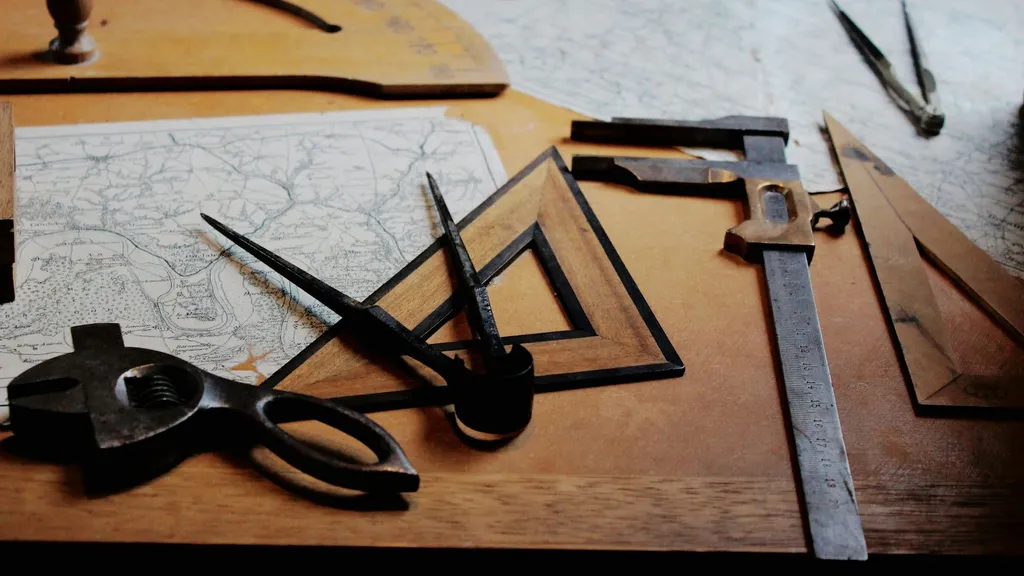
People ask which tools I use, and they usually mean software. The honest answer is that the software matters least. Most of my decisions are made with a pencil, a printer, and a ruler, and the screen is where I finish them. Here is what sits on my desk in Lisbon, sorted by the job each thing does.
Paper first
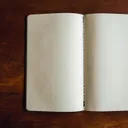
Every project starts in a dot-grid notebook with a soft pencil. Thumbnails are small on purpose, about the size of a stamp, so I can’t fuss over details that don’t matter yet. A page of thirty bad thumbnails is worth more than one careful drawing, because the good idea is usually somewhere around the twenty-third.
I keep a fine black pen for the moment a thumbnail becomes a decision. Pencil is for maybes; ink is for the ones I’ll show.
A cutting mat, a steel rule, and a bone folder
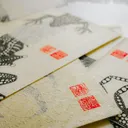
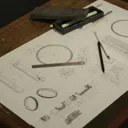
Packaging and print are held, not just looked at. I make a rough dummy of every box, bag, and envelope before I draw the artwork, from plain card cut on the mat. A folded dummy shows in a minute what a flat drawing hides for a week: which panel faces the customer on the shelf, where the glue flap lands, which line of text ends up on a fold.
A proof printer that tells the truth
My printer is not a good printer. It is a reliable one that takes heavy uncoated paper up to A3, which is enough to check scale, hierarchy, and line length at real size. Everything I design gets printed at 100% at least once. A headline that feels right on screen is often too big on paper, and body text is nearly always too small.
Light, a loupe, and one calibrated screen
Colour decisions happen under a daylight lamp at a fixed spot on the desk, never under the warm bulb in the evening. A small loupe checks fine lines, registration, and dot gain on proofs. One of my two screens is calibrated every month; the other is not, on purpose, because most of the people who will see the work have a screen like that one.
Software, one job each
I use one application for layout, one for vector drawing, one for images, and one for prototypes. That’s it. I learn each one deeply instead of trying every new release. The names change every few years; the jobs don’t. If you are starting out, pick one tool per job and stay with it for a year before you look elsewhere.
Learn the job before you learn the tool. The tool will change; the job will still be there.
What stays off the desk
The list of things I keep away is as useful as the list of things I keep close:
- notifications of any kind in the morning, when the drawing happens
- a second project open at the same time as the one I’m working on
- reference images once the direction is chosen, so I stop comparing and start finishing
- my phone, which lives in a drawer until lunch
- anything I bought because someone else’s desk looked good in a photo
Tools are habits
None of this is expensive, and none of it is special. What makes it work is that it never moves. The lamp is always in the same place, the rule is always on the left, and the printer is always loaded with the same paper.
The best print room I have worked in runs the same way. Its squeegees live on one shelf, sorted by blade, cleaned before anyone goes home, and nobody ever has to look for one.
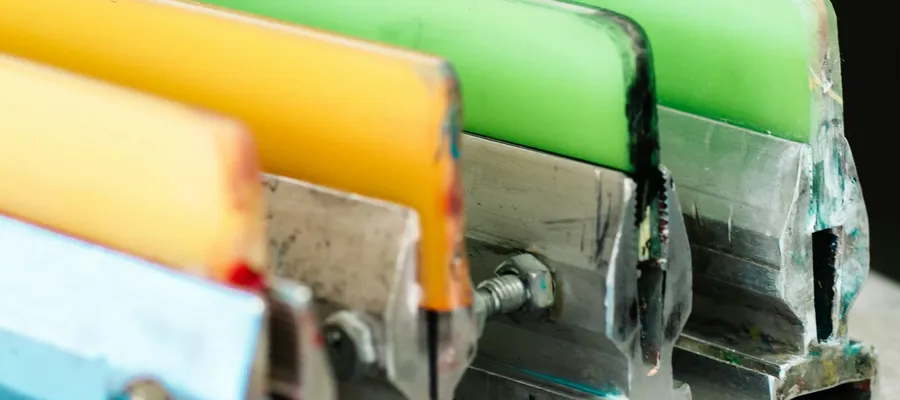
After eleven years, the best tool I own is a desk where I don’t have to look for anything.

Written by
Hugo Merrin
Independent brand designer and art director
Hugo designs identities, packaging, and print for small makers from a studio in Lisbon. Eleven years in, every project still starts with a pencil and a printed proof. He writes here about process, pricing, and the craft behind each job.